# About R3

<figure><img src="https://4122864666-files.gitbook.io/~/files/v0/b/gitbook-x-prod.appspot.com/o/spaces%2FerkRGLIPcJr7pf0O5lr4%2Fuploads%2Fl87phm0eszT1iCdiMWgX%2FFire%20Break%20Treatment%20Photo.jpg?alt=media&amp;token=22c0e324-aa5a-4885-939c-292997580373" alt=""><figcaption></figcaption></figure>

## Introduction

The Restoring Rangeland Resilience (R3) project was created to address the escalating environmental challenges and financial pressures faced by ranchers and landowners across the Western United States. Invasive annual grasses, such as cheatgrass, and the increasing prevalence of wildfires are driving a decline in the U.S. cow herd, intensifying economic hardships, and weakening the resilience of rural communities and the industries that depend on them.

R3’s mission is to safeguard the long-term sustainability of Western Rangelands by combating invasive species and enhancing ecosystem health. The project specifically targets [cheatgrass](https://www.usgs.gov/faqs/what-cheatgrass-and-how-it-harmful#publications), a major threat to rangeland resilience, with the goal of preserving the industries and livelihoods tied to these landscapes.

Through science-based, targeted interventions, R3 aims to restore and improve the productivity of at-risk rangelands across the Western United States. By enhancing rangeland resilience, the project benefits diverse stakeholders, including ranchers, retailers, local communities, utilities, and the beef supply chain. Key outcomes include reducing wildfire risks, increasing beef production profitability, and protecting vital ecosystems, creating shared value for all partners involved.

## The Problem

Today, invasive annual grasses affect over 100 million acres of U.S. pasture and rangelands, with an additional 75 million acres projected to be impacted within the next decade. The latest scientific findings indicate that the conversion of perennial pastures to invasive annual species can result in approximately 42% to 49% reduction in soil carbon, which equates to 1 to 3.5 metric tons of CO₂ equivalent per acre per year. Currently, this degradation affects approximately 1 million acres annually- a figure expected to increase exponentially in the coming years.

Invasive annual grasses, particularly cheatgrass, act as "grassoline" on the Western landscape, drying out early and fueling fires that burn hotter and more frequently than those in native perennial ecosystems. This dynamic has drastically altered fire cycles in rangeland ecosystems like the Great Basin, compressing the natural 50-100 year fire interval of sagebrush ecosystems into as little as one to five years.&#x20;

[This increase in wildfire risk](https://www.rgj.com/in-depth/news/2019/06/27/sagebrush-sea-wildfire-risk-rangeland-nevada/1255395001/) has far-reaching consequences, from the destruction of ranching infrastructure to the loss of critical wildlife habitats and economic stability for rural communities. Without intervention, these fires perpetuate a vicious cycle, where cheatgrass dominates burned areas, further accelerating the spread of invasive species and increasing the likelihood of future fires. This escalating and underfunded crisis demands urgent attention to break the feedback loop threatening the sagebrush sea and the communities and industries that depend on it.

<figure><img src="https://4122864666-files.gitbook.io/~/files/v0/b/gitbook-x-prod.appspot.com/o/spaces%2FerkRGLIPcJr7pf0O5lr4%2Fuploads%2F9pk0Il8k0lheHDCJZNV4%2FWildfire_0.png?alt=media&amp;token=edb2f58f-a708-48e5-9d76-039492af5a3d" alt=""><figcaption><p>Fire clears the way for invasive annual grasses, like cheatgrass, to dominate once diverse ecosystems in Northwest rangelands. Credit: Ben Slyngstad, <a href="https://www.usgs.gov/media/images/invasive-species-and-wildfire">USGS</a></p></figcaption></figure>

## The Breakthrough Innovation

The R3 framework leverages a groundbreaking innovation – Rejuvra®, a biochemical tool for long-term control of invasive annual grass and broadleaf weeds, resulting in:

* Reduced invasive annual grasses&#x20;
* Replenished soil health
* Improved forage production and quality
* Lower wildfire risks by reducing dry, flammable vegetation
* Restored thriving native plant communities
* Enhanced habitats for wildlife
* Better environments for pollinators to thrive

<figure><img src="https://4122864666-files.gitbook.io/~/files/v0/b/gitbook-x-prod.appspot.com/o/spaces%2FerkRGLIPcJr7pf0O5lr4%2Fuploads%2F6WqjodMiF0CC1LQeIzSV%2FScreenshot%202024-09-12%20103236.jpg?alt=media&amp;token=7c7a262a-a201-4bcb-9ffb-f26d597ad187" alt=""><figcaption></figcaption></figure>

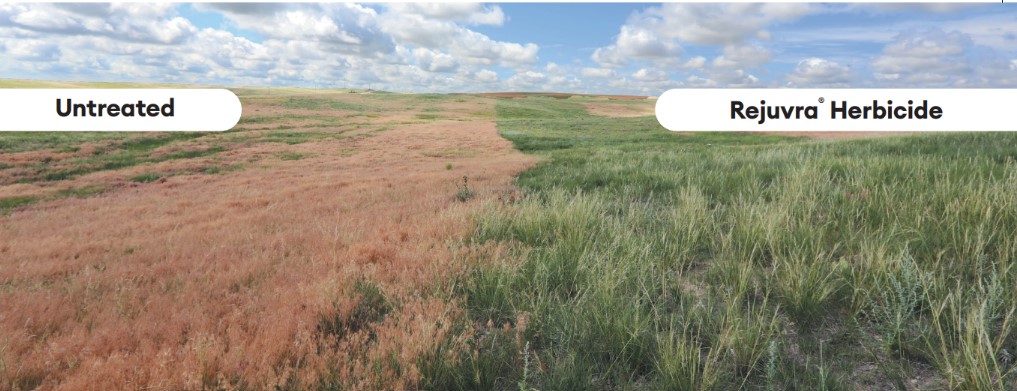
This tool offers the first reliable, long-term solution for targeted control of invasive annual grass seed banks, outperforming alternative methods that often provide only inconsistent, short-term results. A single application of Rejuvra® stops annual grasses from growing for several years - with some applications demonstrating efficacy beyond 5 years. This gives ranchers and land managers a fresh, effective way to reduce invasive grasses while [protecting and promoting the growth of native vegetation](https://bioone.org/journals/invasive-plant-science-and-management/volume-12/issue-1/inp.2019.4/Effect-of-indaziflam-on-native-species-in-natural-areas-and/10.1017/inp.2019.4.short).&#x20;

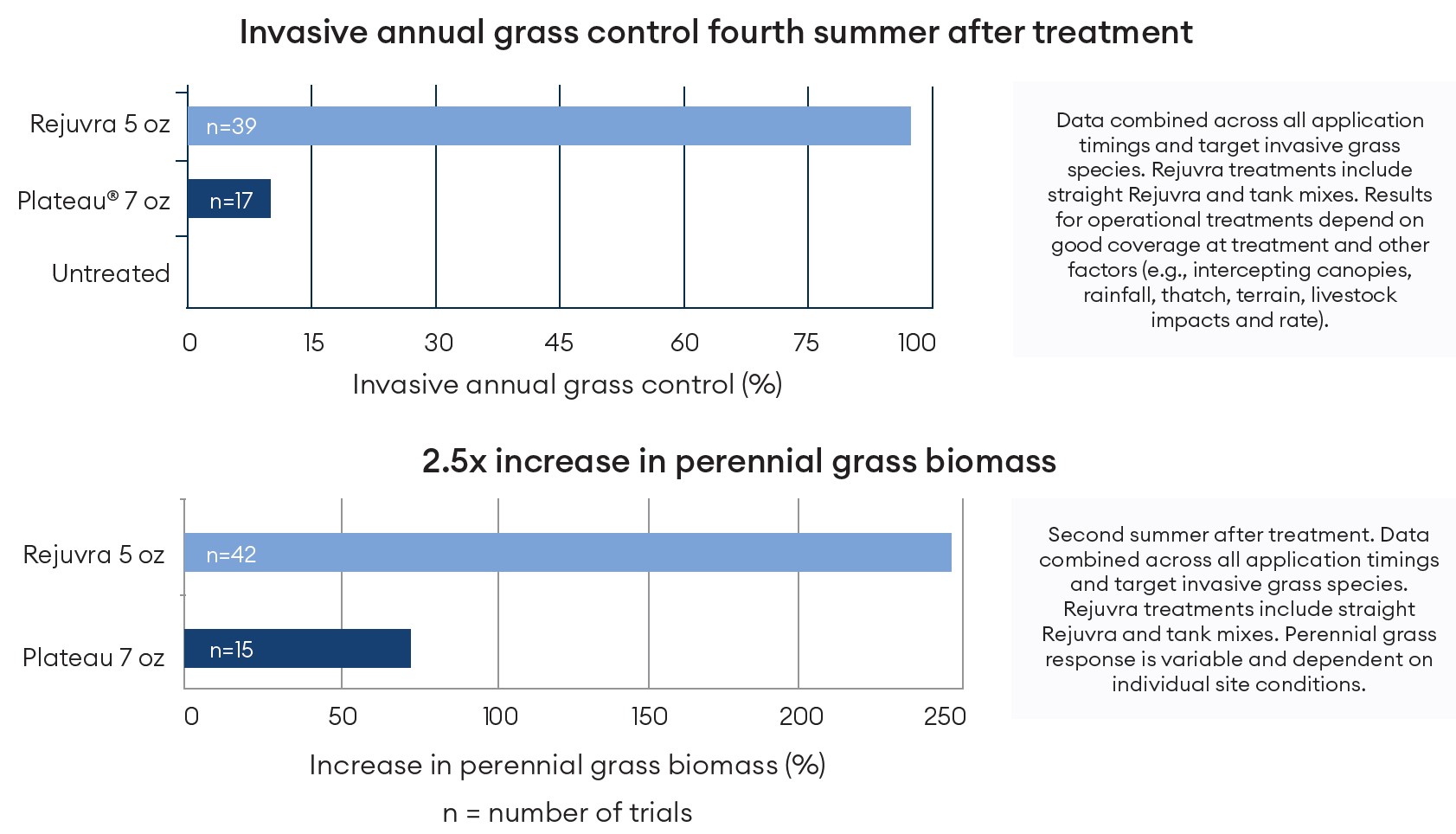
Data combined across 10 studies by top universities, including Colorado State, University of Wyoming, and Montana State, found that Indaziflam (Rejurva®) achieved over 90% control of invasive annual grasses in the fourth summer after treatment. In contrast, untreated areas showed no control, and Imazapic (Plateau) provided less than 10% control.

<figure><img src="https://4122864666-files.gitbook.io/~/files/v0/b/gitbook-x-prod.appspot.com/o/spaces%2FerkRGLIPcJr7pf0O5lr4%2Fuploads%2FWq7LnbuzTvDB5pC39jDQ%2FScreenshot%202024-09-12%20111731.jpg?alt=media&amp;token=c1c61774-0b84-45fb-8160-0c3710f356ab" alt=""><figcaption></figcaption></figure>

## The Economics

At $75-$85 per acre, Rejuvra® offers an economical solution compared to costly restoration activities like reseeding and replanting, which can range from [$200 to $1,000 per acre](https://www.weld.gov/files/sharedassets/public/v/1/departments/public-works/documents/reseeding.pdf) depending on the method and seed selection. The most effective time to control invasive annual grasses is when healthy perennials are still present. R3 prioritizes invasive grass control in areas with thriving perennials to ensure long-term success and cost-effectiveness.

Beyond the environmental advantages, the use of Rejuvra® also builds economic resilience in U.S. beef supply chains, helping ranchers and land stewards maintain profitability and resilience. By increasing forage production by 3.5 times\*, as demonstrated in the analysis, ranchers can significantly boost their available forage while reducing the need for costly restoration efforts. This not only keeps ranchers ranching but also improves their return on investment, as shown in the comparison below, where treated lands yield a 23% annual ROI and recoup investment in just over three years.

<table><thead><tr><th width="276"></th><th>Untreated</th><th>Treated</th><th>Difference</th></tr></thead><tbody><tr><td>Annual forage production lb/acre</td><td>533</td><td>1,830</td><td>1,297</td></tr><tr><td>Available AUMs per section based on 2,000 lb/acre forage per cow-calf pair</td><td>170.6</td><td>585.6</td><td>415</td></tr><tr><td>Annual value of AUMs based on $25 per AUM</td><td>$4,265</td><td>$14,640</td><td>$10,375</td></tr><tr><td>Total restoration costs per section estimate for herbicide + application </td><td>$0</td><td>$33,760</td><td>$33,760</td></tr><tr><td>Annualized restoration cost total cost divided by four years</td><td>$0</td><td>$8,440</td><td>$8,440</td></tr><tr><td>Years to recoup investment: total restoration costs/annual increase in AUM value </td><td></td><td></td><td>3.2 years</td></tr><tr><td>Annual ROI (%)</td><td></td><td></td><td><strong>23%</strong></td></tr></tbody></table>

&#x20;*\*Forage response is variable and dependent on individual sit conditions. Individual investment results may vary*  Project Scope & Geography

## Geography & Scope&#x20;

<div align="center"><figure><img src="https://4122864666-files.gitbook.io/~/files/v0/b/gitbook-x-prod.appspot.com/o/spaces%2FerkRGLIPcJr7pf0O5lr4%2Fuploads%2Fyr26sMdKwbf3Inec7955%2FPicture3.jpg?alt=media&amp;token=6cb70d04-d9f8-4b71-921f-9a7d3fb4ac54" alt=""><figcaption><p>High concentrations of annual grasses demarcated in red and yellow, while lower concentrations are demarcated in green</p></figcaption></figure></div>

R3 will focus on regions heavily impacted by invasive annuals grasses, such as Idaho, Oregon, Washington, Nevada, Utah, Montana, Wyoming, Colorado, Nebraska, and Arizona. California, where highly productive annuals dominate the forage, complicates restoration and requires fundamentally different management strategies, placing it outside the scope of this initiative. Instead, R3 will prioritize innovative approaches in regions where these methods can deliver the most impactful results.

Note, in the imagery analysis above: 1) The stars denotes significant cattle feedlots, which are largely supported by the beef supply shed of affected regions. And, 2) the analysis layer does not extend into eastern portions of Colorado and western portions of Nebraska, Kansas, and the Dakotas, where extensive cheatgrass invasion is present.

## **Stakeholders & Project Partnerships**

R3 will involve a broad coalition of partners, including ranchers, technology providers, environmental organizations, and industry stakeholders. Each partner will play a crucial role in the project’s success, from providing the necessary tools and funding to offering scientific insights and on-the-ground support. The project is also open to additional partnerships that align with its goals and can contribute to its success.

| Expected Partnerships                 | Role                                                                                                                                                                                          |
| ------------------------------------- | --------------------------------------------------------------------------------------------------------------------------------------------------------------------------------------------- |
| Ranchers & Landowners                 | Working with project partners to apply Rejuvra treatments to reduce and mitigate invasive species and wildfire                                                                                |
| Project Developers                    | Design and implementing projects that incorporate the R3 framework for delivering measurable environmental outcomes, coordinating stakeholders, and ensuring alignment with leading standards |
| Beef Supply Chain Partners            | Funding Partners, providing supply chain insights and expertise towards the development of protocol(s) which drive resilience in their supply chain operations and meet climate objectives    |
| Utility Operators                     | Funding Partners, providing insights and expertise towards development of protocol(s) which reduce operational risk of wildfires leveraging ecosystem services                                |
| Tribal Lands                          | Providing ranchlands and local knowledge to guide implementation                                                                                                                              |
| NGOs & Academics                      | Providing scientific insights and potentially lands connected with ongoing complimentary initiatives (USDA Climate-Smart or RCPP)                                                             |
| Impact Investors & Family Foundations | Funding Partners with mission-aligned interests                                                                                                                                               |
| Envu                                  | Lead Partner currently funding the expansion of scientific research, providing Rejuvra® and the Rangeview monitoring platform                                                                 |
| MillPont                              | Clearinghouse providing framework design and digital market infrastructure for facilitating exchange of environmental attributes                                                              |


# Request For Interest

<mark style="color:green;">**This Request for Interest (RFI) explores innovative, scalable financing solutions for restoring Western Rangelands impacted by invasive annual grasses. By leveraging cutting-edge environmental market mechanisms, the Restoring Rangeland Resilience (R3) initiative aims to transform both the economics and ecology of these critical landscapes**</mark>.

## Background

R3 is a collaborative initiative driving the adoption of science-based solutions to enhance rangeland productivity and ecological health. By demonstrating the return on investment (ROI) of rangeland resilience, R3 addresses urgent threats to U.S. livestock production, rural economies, and Western ecosystems.

A key solution under consideration is **Rejuvra®**, which not only doubles desirable forage at approximately $80/acre but also offers carbon benefits, creating an opportunity to integrate climate mitigation with American beef production. This approach has the potential to deliver broad benefits to producers, consumers, ecosystems, and economies.

## Key Objectives

This RFI seeks:

1. **Technical Feedback**: Insights on R3's methods for quantifying ecosystem impacts.
2. **Partnership Opportunities**: Support for the initial development of the R3 program, including cost-sharing and pilot applications.

## Goals for 2025 & Beyond

* Strengthen the scientific foundation for high-integrity environmental outcomes, including carbon-related benefits.
* Launch pilot projects to demonstrate Rejuvra®'s impact.
* Scale the program across Western rangelands by 2025.

## Benefits for Early Sponsors

Sponsors will shape project design, influence measurement, monitoring, reporting, and verification (MMRV) requirements, and secure long-term benefits such as carbon offtake privileges. With an estimated carbon price of $30/tCO₂e, this approach could cover up to 50% of the treatment costs while driving progress in carbon mitigation and ecosystem restoration.

## The Ask

To gather valuable insights and assess the feasibility of scaling rangeland restoration with Rejuvra® treatments, we are seeking responses to the following critical questions:

1. **Carbon Market Feasibility**: Considering the challenges of modeling carbon in Western Rangelands, are carbon markets a viable tool for financing and cost-sharing rangeland restoration efforts at scale?
   * If so, what are the opportunities and limitations?
   * If not, why are they impractical?
2. **Alternative Financing**: What alternative financing pathways could realistically support rangeland restoration in the next 1-3 years?
3. **Carbon Pricing**: How should avoided emissions in rangeland be priced compared to current carbon removal efforts in these areas?
4. **Public Sector Role**: Given Rejuvra®’s potential for wildfire prevention and water quality improvement, what role should public institutions (e.g., BLM, USFS, FEMA, regional governments) play in financing it?
5. **Rancher Responsibility**: How much of the financial burden should ranchers bear to maintain their livelihoods and support local economies?
6. **Carbon Accounting Standards**: How should claims related to avoided emissions in rangelands be viewed under leading carbon accounting frameworks, such as the Science-Based Targets initiative (SBTi) and the Greenhouse Gas Protocol (GHGP)?

## Who Should Respond?

We invite responses from:

* Ranchers and land managers
* Project Developers
* Environmental organizations
* Industry stakeholders
* Carbon market experts
* Public institutions

Each partner will play a vital role in shaping and scaling this initiative.

## Next Steps

Interested parties are encouraged to submit their responses to this RFI by **June 30th**. Your insights will help drive the restoration and resilience of Western Rangelands and ensure the success of this transformative initiative.

For responses to this RFI or additional information, please email:&#x20;

<mark style="color:green;">**Envu:**</mark> <craig.hossfeld@envu.com>

<mark style="color:green;">**MillPont:**</mark> <dominicsv@millpont.com>&#x20;


# Methodology

## Introduction

Ecological disturbances, such as invasive species and altered fire regimes, profoundly impact carbon storage and stability in ecosystems. These disturbances are particularly significant in dryland soils, which serve as substantial carbon reservoirs but are increasingly vulnerable to species invasions and the exotic-grass-fire cycle, as seen in the sagebrush steppe of North America.

[The latest science](https://www.nature.com/articles/s43247-024-01795-9) indicates that the conversion of perennial pastures to invasive annual grasses, currently impacting approximately 1 million acres annually, results in soil carbon losses of 42–49%, with the deepest and most persistent storage horizons being the hardest hit. This equates to annual carbon losses of 1 to 3.5 tCO₂e per acre. While these disturbances reduce soil carbon to a "floor"—a resilient baseline beyond which further losses are unlikely—this highlights a critical opportunity: through restoration, perennial grasses can stabilize and rebuild soil carbon stocks, enhancing long-term ecosystem resilience and contributing to carbon sequestration.

Today, over 100 million acres of U.S. pasture and rangelands are affected by invasive annual grasses, with an additional 75 million acres projected to be impacted within the next decade. Conversion from perennial to invasive annual species contributes to a vicious invasive-fire cycle. These invasive species burn more frequently and at higher intensities than native perennials, perpetuating the degradation of soil carbon and ecological stability.

However, targeted interventions that both protect existing ecosystems and enable restoration of degraded areas offer a promising pathway to reverse these trends. In treated pastures where the spread of invasive species is controlled, and native perennial species are re-established, further soil degradation can be prevented and reversed as deeper root systems, increased biomass, and improved soil coverage work to progressively rebuild soil organic carbon (SOC). This process creates a distinctive carbon asset characterized by:

1. **Avoided Emissions**: Preventing the conversion of native perennial grasslands into exotic annual species.
2. **Carbon Removal**: Restoring native perennials to sequester atmospheric carbon in degraded rangelands.

This methodology integrates cutting-edge science and ecological principles to quantify and capitalize the carbon benefits of rangeland restoration, ensuring measurable contributions to the global carbon cycle while improving ecosystem resilience.

## Climate Impact&#x20;

Research findings highlight the profound impact of exotic annual grass (EAG) invasions and wildfires on carbon storage within the sagebrush steppe ecosystems of North America, a vital dryland carbon reservoir. Key findings include:

* **Soil Carbon Depletion**: EAG invasions and wildfires lead to a loss of 42–49% of soil carbon, particularly from deep soil horizons, which store 66% of the region's carbon.
* **Total Carbon Loss**: Degraded areas release approximately 18.5 million metric tons of carbon per year. This represents about 1% of the total carbon stored in Western U.S. cold desert soils, or the rough equivalent to 16 million gas-powered passenger vehicles.
* **Aboveground Biomass Reduction**: Areas affected by wildfires lose 93% of aboveground biomass, while invaded areas lose 55% compared to intact ecosystems.
* **Ecosystem Shift**: Invasion accelerates the replacement of deep-rooted native perennials with shallow-rooted annual grasses, creating a "grass-fire cycle" that perpetuates frequent, intense wildfires and further carbon loss.
* **Global Relevance**: Similar exotic grass-fire cycles impact ecosystems worldwide, including Central and South America, Hawaii, and Australia, with unknown consequences for global carbon stocks.

*Conservative estimates suggest carbon losses could reach 75 million metric tons of CO2e by 2030 - just over 1% of total annual U.S. GHG emissions.* Remarkably, these emissions stem primarily from just 1-2 species of invasive plants, underscoring the critical importance of addressing this issue in national climate strategies.

These estimates only reflects the lower bounds of avoidable emissions and do not account for the potential carbon removals from restoring the 100 million acres already affected. When combining both avoidance and restoration efforts, the total carbon impact could exceed 100 million metric tons of CO2e annually, making this strategy essential for long-term climate mitigation.

This analysis emphasizes the urgent need for restoration and proactive management of native perennial shrublands. Stabilizing soil carbon stocks and reversing the shift of these ecosystems from carbon sinks to carbon sources are essential steps to mitigating global greenhouse gas emissions and ensuring ecosystem resilience.

## Biochemical Management Mechanism

Indaziflam, the active ingredient in Rejuvra®, is a pre-emergent herbicide that targets the seed bank of invasive annual grasses. It works by inhibiting the growth of new weeds before they can establish, providing long-term control. Indaziflam’s unique formulation prevents weed seeds from germinating without affecting established perennial plants, making it particularly effective for rangeland restoration. It is also known for its stability, as it is not easily degraded by sunlight and does not volatilize, allowing it to remain active in the soil for extended periods. This makes it a valuable tool for controlling invasive species in both public and private lands.

Rejuvra® is approved for use in a wide range of environments, including rangelands, Conservation Reserve Program (CRP) lands, natural areas, parks, wildlife management areas, recreational spaces, fire rehabilitation zones, prairies, and firebreaks. It is also safe for areas that are grazed or cut for hay. Registered with the EPA, Rejuvra® is [approved for use on both public (BLM)](https://www.federalregister.gov/documents/2024/07/12/2024-15279/notice-of-availability-of-the-record-of-decision-for-the-final-programmatic-environmental-impact#:~:text=The%20BLM%20has%20approved%20seven,are%20registered%20by%20the%20EPA.) and private lands across 14 states, including Washington, Oregon, California, Nevada, Idaho, Montana, Wyoming, Utah, Colorado, New Mexico, Kansas, Nebraska, and the Dakotas.

<div align="center"><figure><img src="https://4122864666-files.gitbook.io/~/files/v0/b/gitbook-x-prod.appspot.com/o/spaces%2FerkRGLIPcJr7pf0O5lr4%2Fuploads%2FY3G3ufxbXbBRUdFexhID%2Fbefore.jpg?alt=media&amp;token=c96bbd44-d507-4c30-8a84-3a2a5a6782b0" alt=""><figcaption><p>Before Rejuvra Treatment</p></figcaption></figure></div>

<figure><img src="https://4122864666-files.gitbook.io/~/files/v0/b/gitbook-x-prod.appspot.com/o/spaces%2FerkRGLIPcJr7pf0O5lr4%2Fuploads%2F5M0NnWdfIO5lM4YDn6ct%2Fafter.jpg?alt=media&amp;token=c236b687-6146-462d-b647-19b9877b65a0" alt=""><figcaption><p>After Rejuvra Treatment</p></figcaption></figure>

Indaziflam's long-term, stable control of invasive grasses while [preserving native perennials](https://npj.uwpress.org/content/21/3/290) makes Rejuvra® an ideal choice for large-scale rangeland protection and restoration efforts. In alignment with the R3 mission, key advantages include:

* **Wide approval for diverse environments**: Rejuvra® is approved for use across various landscapes, including public and private lands.
* **Proven success in restoring rangeland health**: It has demonstrated effectiveness in promoting rangeland recovery.
* **Sustained control of invasive annuals**: One application provides long-lasting results, reducing the need for frequent and costly retreatments.
* **Supports recovery of desirable perennials**: Native plants can regain dominance, enhancing rangeland ecosystems.
* **Enables productive grazing**: Grazing can continue with minimal disruption, benefiting ranchers economically.

## Co-Benefits

> ***Cheatgrass landscapes burn 4x more frequently than in native vegetation types -*****&#x20;Jolie Pollet, Division Chief of Fire Planning & Fuels Management BLM**

<figure><img src="https://4122864666-files.gitbook.io/~/files/v0/b/gitbook-x-prod.appspot.com/o/spaces%2FerkRGLIPcJr7pf0O5lr4%2Fuploads%2FlRwJZwTCAsrnJcZ8uVjE%2Ffire.jpg?alt=media&amp;token=018c4b27-532c-44af-b99e-5a97acc78463" alt=""><figcaption><p>With annual grasses promoting fire frequency and spread, wildfires in the western US (states dominated by annual grasses) are larger and more destructive (Abatzoglou and Kolden, 2011). </p></figcaption></figure>

In the context of climate mitigation market mechanisms, **co-benefits** refer to the additional positive outcomes that occur alongside the primary goal of reducing or avoiding GHG emissions. While the main focus is often on carbon reduction, co-benefits can enhance the overall value of a project or action.&#x20;

Rejuvra® delivers a range of co-benefits that extend beyond carbon mitigation, making it a powerful tool for climate action and rangeland restoration. These co-benefits include:

* **Wildfire Mitigation**: By reducing fine fuel loads and increasing perennial plant cover, Rejuvra® lowers the intensity and spread of wildfires. Even one prevented fire can significantly protect community resources and enhance long-term ecosystem resilience.&#x20;
* **Water Retention**: Enhanced soil health conditions improve[ water holding and filtration capacity](https://pastureproject.org/wp-content/uploads/2021/11/Regenerative-Grazing-and-Carbon.pdf), which is critical in arid regions with low precipitation, contributing to more sustainable land management.
* **Watershed Quality Impact**: Deeper roots and better ground cover reduce soil erosion, while mitigating fire impacts provides substantial, though often unmeasured, benefits to watershed health and water quality.
* **Enhanced Biodiversity**: Rejuvra® encourages a greater variety of plant and animal species richness, which [protects and restores native wildlife](https://muledeer.org/news/blm-herbicide-approval/) habitats.
* **Desirable Forage Increases**: Measured increases of forage availability by 2-10 times in previously affected areas, improving the productivity of grazing lands and directly benefiting ranchers' livelihoods.
* **Improved Livestock Health**: A diverse range of forage species leads to [better body condition scores](https://extension.missouri.edu/publications/g2230) (BCS) for livestock, resulting in healthier, more productive and profitable animals.

These co-benefits not only enhance rangeland restoration but also offer tangible economic, environmental, and social returns, aligning with the R3 initiative's mission. Alongside carbon as a financing mechanism, R3 will explore alternative pathways related to these co-benefits, with the specific focus on:

* **Increased Forage:** Financed through agricultural lenders to boost productivity and profitability for ranchers.&#x20;
* **Wildfire Mitigation and Watershed Protection:** Supported by municipal green bonds to reduce fire risks and enhance water quality.&#x20;

The primary limitation to these pathways (and carbon financing) is the current lack of sufficient science to underwrite outcomes with statistical confidence. <mark style="color:green;">**Each financing strategy will require a scale-up period alongside continued research and transparent risk mitigation to ensure credibility in the environmental marketplace.**</mark>

## Quantification of Climate Mitigation Benefits

As R3 develops its framework, the United States Geological Survey (USGS) has published a [comprehensive study ](https://www.usgs.gov/centers/forest-and-rangeland-ecosystem-science-center/science/impacts-exotic-annual-grass-invasion)quantifying the carbon impact of invasive annual grasses on Western rangelands. This landmark research focuses on soil carbon stocks to depths of 100 cm across key inter-mountain ecoregions within the sagebrush steppe, including the Northern Great Basin, Snake River Plain, and Idaho Batholith. The study underscores the profound effects of invasive annual grasses and altered fire regimes on carbon storage, revealing a 42–49% depletion in soil carbon stocks, with the greatest losses observed in deeper soil horizons. Annually, approximately 20 million metric tons (Tg) of carbon are released across the \~400,000 hectares of sagebrush steppe degraded by wildfire and invasion—a significant fraction of the region's soil carbon pool.

The research also introduces the concept of a "soil-carbon floor," where remaining carbon reaches a resistant baseline below which further losses are unlikely. While these findings highlight the magnitude of degradation, they also signal potential for stabilization and recovery through targeted restoration efforts. The USGS study provides foundational data for developing a regional carbon model, offering critical insights into the dynamics of soil carbon loss and restoration across Western rangelands.

Building on these findings, R3’s methodology leverages two key quantification approaches: one for carbon avoidance and another for carbon sequestration. These dual objectives require clear delineation of boundaries between avoided emissions and restored carbon stocks. Tools like Envu’s RangeView™ facilitate this by using satellite imagery to establish the baseline extent of invasive annuals and prioritize interventions.

With the comprehensive data and tools provided by the RangeView™ platform, R3 can effectively map, monitor, and manage invasive species, ensuring targeted interventions in rangelands. This detailed tracking enables R3 not only to restore ecosystems but also sets the stage for quantify the broader environmental benefits as follows:&#x20;

1. Use RangeView™ to estimate the total area invaded as a percentage of the project area.
2. Extrapolate the future impact zone over five years, assuming a 15% annual cheatgrass invasion rate (the accepted scientific rate of cheatgrass encroachment).
3. **Claim carbon avoidance** on the projected invasion zones by either:
   * Measuring, modeling, and remeasuring, or
   * Measuring and modeling only.
4. **Claim carbon removals** on existing invasion zones where Rejuvra® was applied by:
   * Measuring, modeling, and remeasuring.

This structured approach, driven by high-accuracy data and ongoing monitoring, allows for precise quantification of both carbon avoidance and sequestration, providing valuable insights into the climate mitigation benefits of rangeland restoration efforts.

Below is an example of a pasture that is 50% invaded at pre-treatment and the projected climate benefit results:

<figure><img src="https://4122864666-files.gitbook.io/~/files/v0/b/gitbook-x-prod.appspot.com/o/spaces%2FerkRGLIPcJr7pf0O5lr4%2Fuploads%2Fpb0tm3n5scm6hAJrrbaH%2FPicture5.jpg?alt=media&amp;token=9843e2eb-1194-432c-ae6d-8b5e7d398158" alt=""><figcaption><p>Green represents perennial species, while Yellow represents the encroachment of invasive annuals</p></figcaption></figure>

<figure><img src="https://4122864666-files.gitbook.io/~/files/v0/b/gitbook-x-prod.appspot.com/o/spaces%2FerkRGLIPcJr7pf0O5lr4%2Fuploads%2Fo1g1xVU8k7JdAAkhu4o4%2FScreenshot%202024-09-13%20091856.jpg?alt=media&amp;token=010e20ca-8210-43af-92c8-cd9a628dc159" alt=""><figcaption></figcaption></figure>

These results visually illustrate the projected mitigation of cheatgrass invasion over a five-year period, aligning with the example scenario shared earlier. As seen in the **Low**, **Medium**, and **High Avoidance Scenarios**, the combination of carbon sequestration and avoidance directly correlates to the scale of cheatgrass control and restoration efforts. Conservatively assuming \~ 0.5 tCO2e/ac in avoided emission per year (note, studies suggest a range closer to 1-3.5 tCO2e/ac per year) over five years, cumulative carbon avoidance reaches just under 1 tCO2e in the Low Scenario, over 1.5 tCO2e in the Medium Scenario, and exceeds 3 tCO2e in the High Scenario. This demonstrates how effective cheatgrass management can significantly reduce emissions while restoring rangeland health, with avoidance consistently playing a key role in the total climate mitigation impact.

## Monitoring, Reporting & Verification

The RangeView™ platform is designed for Monitoring, Measurement, Reporting, and Verification (MMRV) of infested areas and for ensuring the ongoing protection of project sites. It utilizes satellite reflectance data, which measures sunlight reflected from the Earth’s surface, corrected for atmospheric effects. This data helps analyze land cover and assess vegetation health. The platform also incorporates high-resolution daily imagery to enhance monitoring precision.

<figure><img src="https://4122864666-files.gitbook.io/~/files/v0/b/gitbook-x-prod.appspot.com/o/spaces%2FerkRGLIPcJr7pf0O5lr4%2Fuploads%2FdlZgJEw83rvbI7Qz8phi%2FRV.jpg?alt=media&amp;token=44f725f8-8554-4077-8558-1b0a204e53ae" alt=""><figcaption></figcaption></figure>

Additional data sources include the Soil Survey Geographic Database (SSURGO), providing detailed soil properties and productivity information, and meteorological data to understand climate conditions and predict weather patterns. Ground-level data, collected since 2019 by Envu and Satelytics, includes verified geospatial and reflectance data through sub-meter GPS units and backpack spectrometers. This comprehensive dataset underpins cheatgrass infestation mapping across the western U.S.

To further support cheatgrass predictions, the model trained on approximately 250,000 observations of native and exotic grasses achieves an accuracy rate of 94%. Ongoing ground verification ensures the model's continued accuracy and helps verify interventions.

The current process for treating pastures involves identifying at-risk areas, mapping them through the RangeView™ platform, and sharing these target zones with aerial applicators for precise herbicide application.


# Safety & Stewardship

Rejuvra's® Environmental and toxicological profile

## General Description

Rejuvra® herbicide is a cellulose-biosynthesis inhibitor (CBI) and is classified as a Group 29 Herbicide by the Weed Science Society of America. Rejuvra inhibits crystalline cellulose deposition in plant cell walls, affecting cell wall formation, cell elongation and division. Actively growing meristematic root and shoot tissues (areas of cell division and elongation) of germinating weed seeds are affected. Generally, weeds are only controlled if Rejuvra is applied and sufficiently activated by rainfall before seeds start to germinate. Rejuvra is not susceptible to degradation from sunlight and is not volatile.

## Mammalian Toxicity&#x20;

Rejuvra exhibits low acute (short-term) toxicity via all routes of exposure (inhalation, ingestion and dermal) and is not a skin sensitizer. Longer-term toxicity testing showed no evidence of immunotoxicity, developmental or reproductive toxicity, genotoxicity, or carcinogenicity. Further, there is low dietary and occupational exposure. Based on these study results, the label carries the CAUTION signal word. CAUTION signifies that standard personal protective equipment is needed to ensure safety to anyone handling the product. All mixers, loaders, applicators and other handlers must wear a long-sleeved shirt, long pants, shoes plus socks and chemical-resistant gloves.

## Groundwater and Surface Water Advisories

U.S. pesticide labels require groundwater and surface water advisories based on laboratory measurements of degradation and sorption. Some key environmental and chemical properties are provided in the nearby table. Rejuvra degrades in soil by microbial activity. Field dissipation studies determined a soil half-life of between nine and 69 days and a mean half-life of 41 days. This represents expected dissipation from operational use. This is much faster than degradation rates measured in laboratory studies where half-lives were greater than 150 days. Rejuvra is used at very low use rates of 0.7 to 1 ounce active ingredient per acre. Low use rates combined with moderate soil degradation rates, medium-to-low mobility and the fact that Rejuvra binds to soil organic matter results in low potential for movement into groundwater when used according to label directions. This is supported by low downward movement measured in field studies. There is some potential for surface runoff of Rejuvra, but this can be mitigated by following label instructions regarding rainfall and vegetative buffer strips.

## Environmental Risk Assessment

To understand the risk that Rejuvra poses in the environment, the expected exposure is calculated based on label use directions and the environmental fate properties of the active ingredient in Rejuvra. The predicted exposure is compared to the toxicity endpoints (concentrations at which toxicity was observed) in laboratory studies. If exposure is predicted to be lower than the concentration at which toxicity occurs, risk to non-target organisms is considered minimal.

The risk assessment for Rejuvra indicates that nonvascular aquatic plants, fish, aquatic invertebrates, terrestrial invertebrates, marine/estuarine organisms, birds, mammals and bees are not at risk because of low predicted exposure.

The Rejuvra® herbicide label states that it is toxic to fish and aquatic invertebrates. This statement is based solely on results of laboratory toxicity tests without consideration of the potential environmental exposure from using Rejuvra according to label directions. When potential exposure from using Rejuvra according to label directions is considered, no impact to fish and aquatic invertebrates is expected.&#x20;

Non-target terrestrial plants and aquatic vascular plants are potentially at risk from exposure as is expected for an herbicide compound. All label instructions should be followed to minimize the risk to non-target plants. Rejuvra has no effect on microbes at rates far above typical field rates. Rejuvra did not adversely affect the respiration of sewage sludge bacteria nor was it found to cause adverse effects in carbon mineralization or nitrogen fixation rates in bacteria.

<table><thead><tr><th>Parameter</th><th width="163">Value</th><th>Interpretation</th></tr></thead><tbody><tr><td>Water solubility</td><td>.4.4 mg/L (pH 4) 2.8 mg/L (pH 7-9)</td><td>moderate solubility</td></tr><tr><td>Vapor pressure</td><td>2.5 x 10-8 pascal</td><td>not volatile</td></tr><tr><td>Absorption to soil (Koc)</td><td>496</td><td>150-500 = medium mobility; 500-2,000 low mobility; *Rejuvra is on the boder between medium and low mobility</td></tr><tr><td>Soil degradation (field)</td><td>9-to-69-day half-life, mean 41 days</td><td>moderate degradation</td></tr></tbody></table>

*\*McCall's soil mobility classification scheme*